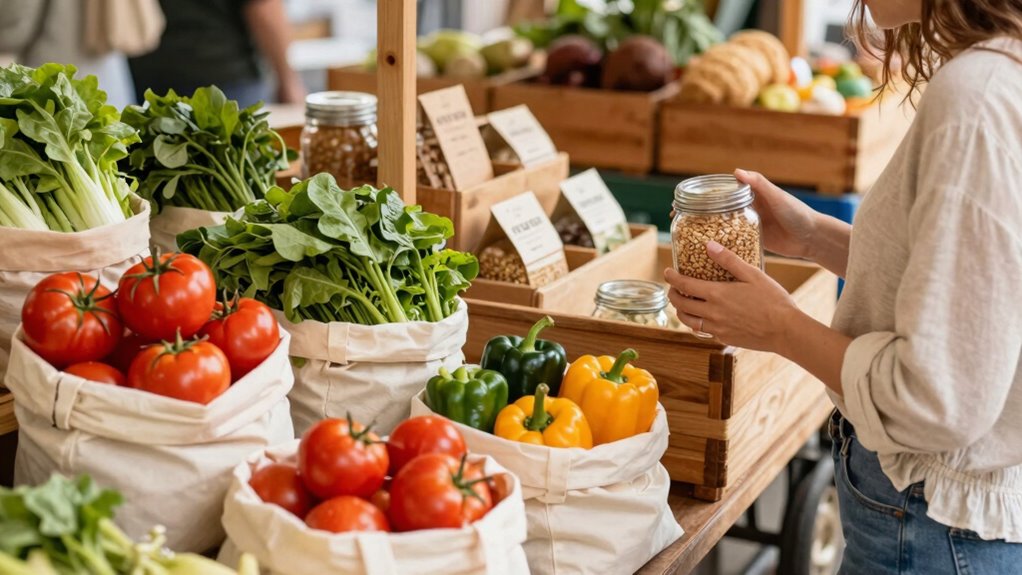

To shop with less waste and stress, plan your meals for the week and create a focused shopping list to avoid impulse buys. Choose eco-friendly packaging, buy from local markets, and opt for seasonal produce to reduce packaging and environmental impact. Organize your shopping list by store layout to save time and focus on bulk or package-free items. By applying these mindful practices, you’ll cut waste and shop more efficiently—more tips await to help you succeed.

Get home appliances delivered free with Prime
- Fast, free delivery on millions of items
- Prime Video, Amazon Music and more included
- Member-only deals all year
Key Takeaways
- Plan weekly meals and create a detailed shopping list to avoid impulse purchases and reduce food waste.
- Choose products with biodegradable, recyclable, or minimal packaging, and bring reusable containers and bags.
- Shop at stores supporting sustainable practices, focusing on bulk, loose produce, and package-free items for efficiency.
- Support local markets and seasonal produce to minimize packaging and environmental impact.
- Stay flexible and informed about recyclable materials and responsible brands to make eco-friendly shopping choices.
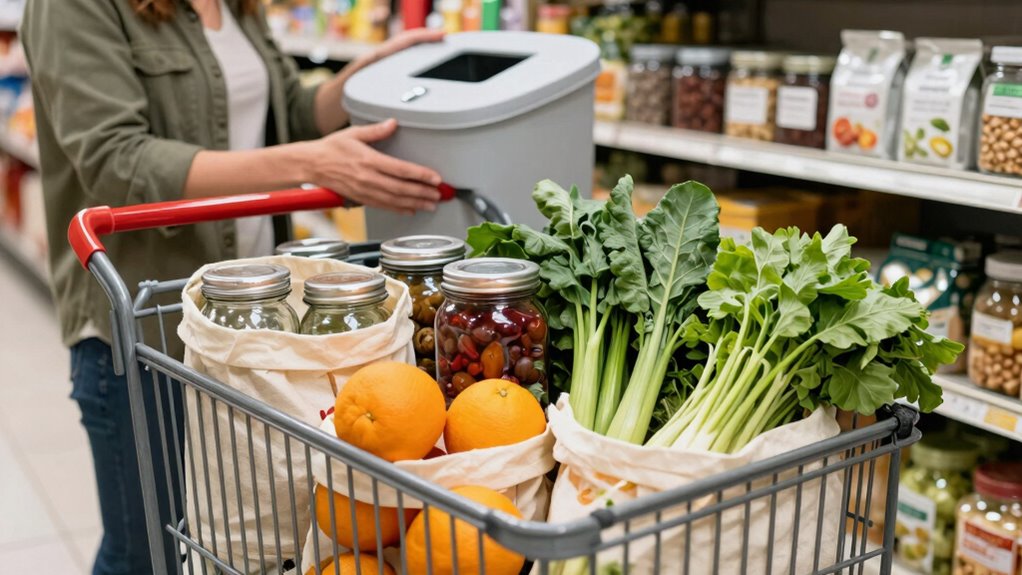
Shopping for food can feel overwhelming, but with a few simple strategies, you can reduce waste and make the experience more enjoyable. One of the best ways to do this is by focusing on meal planning before you head to the store. When you plan your meals for the week, you know exactly what ingredients you need, which helps prevent impulse buys and minimizes food waste. Make a detailed shopping list based on your meal plan, and stick to it as closely as possible. This way, you’re less likely to buy items you don’t need, which often end up wasted. Plus, meal planning can save you time and money, ensuring you only purchase what’s necessary for your meals.
Meal planning helps prevent waste, saves time, and keeps your shopping focused and efficient.
Another key aspect of reducing waste is choosing products with eco friendly packaging. Many stores now offer options like bulk bins, which allow you to buy only the quantities you need, reducing excess packaging. When you buy packaged items, look for brands that prioritize eco friendly packaging, such as biodegradable or recyclable materials. Bringing your own reusable containers and bags also makes a big difference. Not only do you cut down on single-use plastics, but you also gain control over the packaging of your food. For example, instead of pre-packaged salads or cut fruits, opt for whole produce and prepare your own at home. This minimizes waste generated by unnecessary packaging, and you often get fresher, higher-quality ingredients.
To make shopping less stressful, consider shopping at stores that support sustainable practices. Some stores have dedicated sections for loose produce, bulk grains, and package-free items, making it easier to select exactly what you need. Shopping during off-peak hours can also minimize stress, as the aisles are less crowded and you can focus on your list without feeling rushed. Keep your shopping list organized by store layout, so you don’t waste time wandering aisles. Additionally, being mindful of packaging choices and how they impact the environment can help you make more informed decisions during your shopping trips. Being aware of sustainable shopping options can further enhance your efforts to reduce waste and support environmentally responsible brands. Incorporating environmentally conscious practices into your shopping routine not only helps the planet but can also encourage others to adopt similar habits. Furthermore, educating yourself about recyclable materials can make your waste disposal more effective and environmentally friendly.
Finally, embrace flexibility. Sometimes, you won’t find exactly what’s on your list, and that’s okay. Being adaptable allows you to explore local markets or seasonal produce, which often come with less packaging and support local farmers. By planning ahead with your meals, choosing eco friendly packaging options, shopping thoughtfully, and staying flexible, you’ll find that shopping for food becomes less stressful and much more environmentally responsible.
As an affiliate, we earn on qualifying purchases.
Frequently Asked Questions
How Can I Start Reducing Food Waste Immediately?
To start reducing food waste immediately, focus on meal planning to buy only what you need. Use a shopping list to avoid impulse buys that might spoil. Practice composting tips for food scraps like vegetable peels and coffee grounds, turning waste into valuable compost. Store leftovers properly to extend their freshness, and get creative with leftovers to prevent throwing away edible food. These steps help cut waste and make your shopping more efficient.
What Are Eco-Friendly Packaging Options for Groceries?
Eco-friendly packaging options for groceries include reusable containers and biodegradable wraps, offering sustainable alternatives to single-use plastics. You can use stainless steel or glass containers for bulk items, snacks, and fresh produce. Biodegradable wraps made from beeswax or plant-based materials help keep foods fresh while reducing plastic waste. By choosing these eco-friendly options, you actively cut down your environmental footprint and make your shopping more sustainable and less stressful for the planet.
How Do I Manage Food Waste at Home Effectively?
To manage food waste effectively at home, you should prioritize meal planning and portion control. Plan your meals based on what you already have and what you need, reducing excess. Use proper portion sizes to avoid leftovers that might spoil. Store food correctly to extend freshness, and get creative with leftovers for new meals. These steps help you cut waste, save money, and enjoy fresher, more sustainable eating habits.
Are There Apps to Help Plan Low-Waste Shopping Trips?
Yes, there are apps to help plan low-waste shopping trips. You can use them to create meal prep-friendly shopping lists that focus on reducing waste. These apps often include features like inventory tracking, recipe suggestions, and bulk buying options, making your shopping more efficient and eco-friendly. By planning ahead, you minimize impulse buys and food spoilage, ensuring your trips are both sustainable and stress-free.
How Can I Involve My Family in Waste-Reducing Shopping Habits?
You involve your family in waste-reducing shopping habits by turning it into a fun collaboration. Coincidentally, sharing planning and decision-making encourages everyone’s participation. You can assign roles, like meal planning or sourcing bulk items, making shopping a team effort. Family involvement grows when you share goals, celebrate eco-friendly choices, and discuss ways to reduce waste. This not only makes shopping more efficient but also nurtures sustainable habits together.
Conclusion
Shopping smarter for food means less waste and less stress, so you can enjoy your meals and your day more. Remember, it’s okay to start small—bring your own bags, plan your list, and buy only what you need. Some worry it’s complicated, but with a little practice, it becomes second nature. Embrace the change, and you’ll find yourself saving money, reducing waste, and feeling more relaxed every time you shop.
NFL season / tailgating Picks
team gear
As an affiliate, we earn on qualifying purchases.