
TL;DR

Get home appliances delivered free with Prime
- Fast, free delivery on millions of items
- Prime Video, Amazon Music and more included
- Member-only deals all year
A Livingetc report featuring lighting designers explains that task lighting is focused illumination for a specific activity, not a particular fixture style. Its placement should reflect how people use each room, alongside ambient and accent lighting.
Livingetc has published a guide to task lighting, describing it as focused illumination that supports a specific activity, such as reading, cooking, working or applying makeup. Lighting designers interviewed for the report say the term refers to a fixture’s function, not its appearance, and recommend planning lights around how people use each room.
Vanessa Macedo, an associate lighting designer at John Cullen Lighting, defines task lighting as light directed where it is needed to make an activity comfortable and practical, without eye strain. That can mean illuminating a kitchen work surface, a desk, a bedside book or a bathroom vanity. The relevant question is what needs to be seen clearly and where the activity takes place.
Kiersten Hoiland, founder of Hoiland Studios, similarly describes task lighting as a functional requirement rather than a specific fixture style. A pendant, floor lamp or linear LED can serve the role if it provides suitable light on the area where a task happens. The report says task lighting is not limited to utilitarian-looking fittings.
The guide recommends identifying routines before choosing fixtures: reading in bed, working at a dining table or getting ready at a sink can each call for a different placement. Kitchens generally need deliberate illumination at work surfaces, while hallways need comfortable light for moving through them. In a living room, a floor lamp beside an armchair may be used for reading.
Light Where Daily Tasks Happen
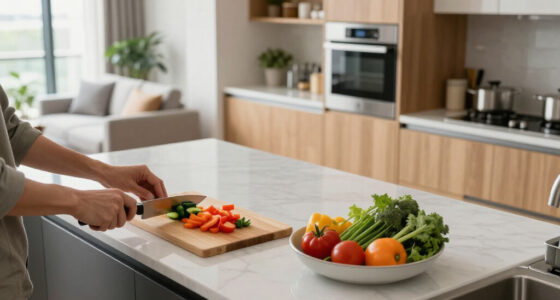
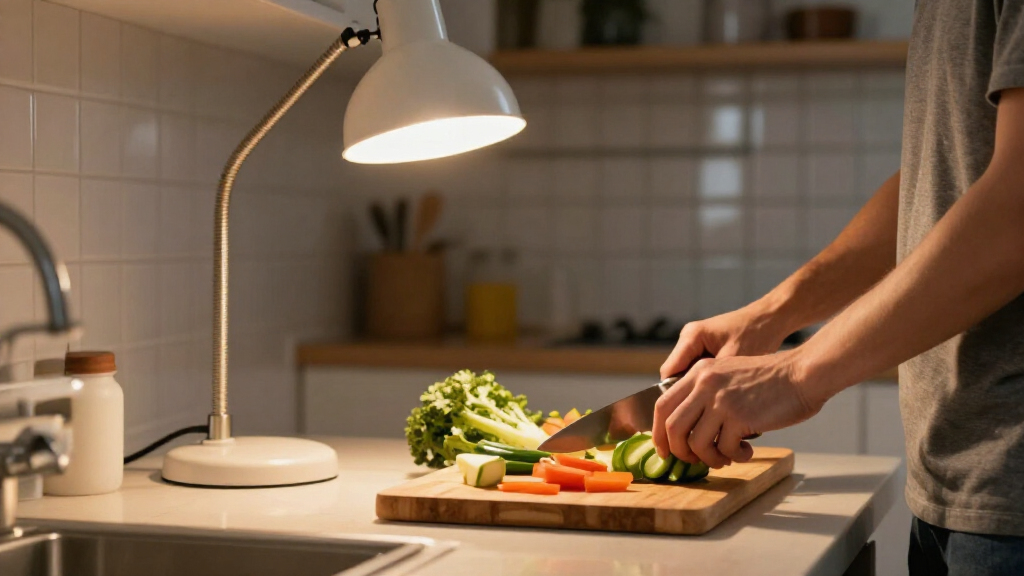
Task lighting is intended to support everyday activities, including chopping ingredients and reading. A room may have decorative fixtures and still leave a desk, counter or chair poorly lit if the light does not reach the relevant surface. Planning around the task connects fixture placement to the room’s practical use.
The report presents fixture selection as involving both appearance and function. A fixture can contribute to a room’s design while directing light toward a specific area. For homeowners planning renovations or updating a lighting scheme, the guidance emphasizes considering both style and where the light falls.
adjustable LED desk lamp with dimmer for home office
As an affiliate, we earn on qualifying purchases.
As an affiliate, we earn on qualifying purchases.
Task Lighting Within a Layered Scheme
The Livingetc report places task lighting alongside ambient lighting, which establishes a room’s overall level of light and mood, and accent lighting, which draws attention to features such as artwork, materials or architectural details. It presents these as different roles within one lighting plan, rather than competing approaches.
The practical advice is to begin with activities and room layout, then choose lighting suited to those needs. This is more specific than selecting a fixture based on appearance alone. The source focuses on residential design and offers recommendations from two lighting professionals; it does not provide technical standards, measured light levels or product-testing results.
“Task lighting is lighting designed to support a specific activity, providing focused illumination exactly where it is needed.”
— Vanessa Macedo, associate lighting designer at John Cullen Lighting
Room Needs Vary by Household
The report does not prescribe exact fixture heights, brightness levels, color temperatures or technical specifications. Those choices depend on the room, the task and the person using the space; the supplied source does not set out a method for measuring or comparing performance. It also does not establish that one layout will suit every home.
The article offers design guidance rather than a controlled study of lighting outcomes. Its recommendations are attributed to the two designers, and the material provided does not include independent research or evidence quantifying effects on comfort, eye strain or energy use.
Start With Your Daily Routines
For readers planning changes, the report suggests noting where activities happen: which surfaces are used for cooking, where someone reads, and whether a dining table doubles as a workspace. Those details can inform fixture placement and help identify gaps before a purchase is made.
Specific design decisions should account for the room’s layout and the light required for the task. The supplied report does not announce a follow-up study or future development; its central recommendation is to build a lighting plan around household routines and combine task lighting with ambient and accent light.
Key Questions
What does task lighting mean?
Task lighting is focused illumination intended to support a particular activity, such as reading, cooking, working or applying makeup.
Does task lighting require a particular kind of fixture?
No. The designers quoted by Livingetc say a pendant, floor lamp or linear LED can serve as task lighting if it directs suitable light onto the area being used.
Where can task lighting be used at home?
It can be used anywhere a specific activity needs focused light, including kitchen counters, desks, bedside reading areas, dining tables, bathroom vanities and an armchair used for reading.
How does task lighting differ from ambient and accent lighting?
Task lighting supports an activity, ambient lighting supplies a room’s general light and mood, and accent lighting highlights features such as artwork or architectural details.
How should I plan task lighting?
Start by identifying what you do in each space and where the activity takes place. Then consider which surface needs focused light and choose a fixture and position suited to that use.
Source: rss
NFL season / tailgating Picks
team gear
As an affiliate, we earn on qualifying purchases.