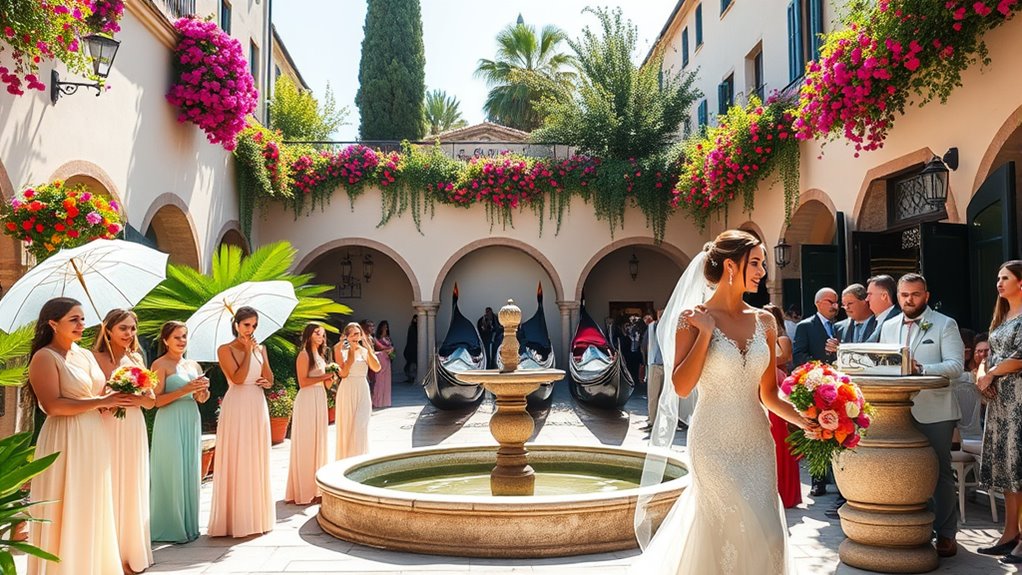

Italian weddings are full of meaningful symbols and cherished rituals. You’ll see vibrant flower arrangements representing love and good fortune, while specific colors embody hopes for the couple’s future. The bride’s gown and accessories symbolize purity and heritage, and floral decor invokes blessings. Each element reflects centuries-old traditions that honor family, unity, and prosperity. If you explore further, you’ll discover how these timeless customs beautifully weave together Italy’s cultural history into a joyful celebration.
Key Takeaways
- Italian wedding flowers symbolize love, purity, and good fortune, with color choices reflecting hopes for the couple’s future.
- Bridal attire and accessories, such as veils and heirlooms, represent purity, heritage, and protection against evil spirits.
- Flower arrangements and decor incorporate traditional symbolism to invoke blessings, prosperity, and unity.
- Rituals like exchanging rings and the veiling of the bride embody cultural values and familial continuity.
- The integration of flowers, attire, and customs reflects Italy’s rich cultural heritage and the symbolic significance of marriage.
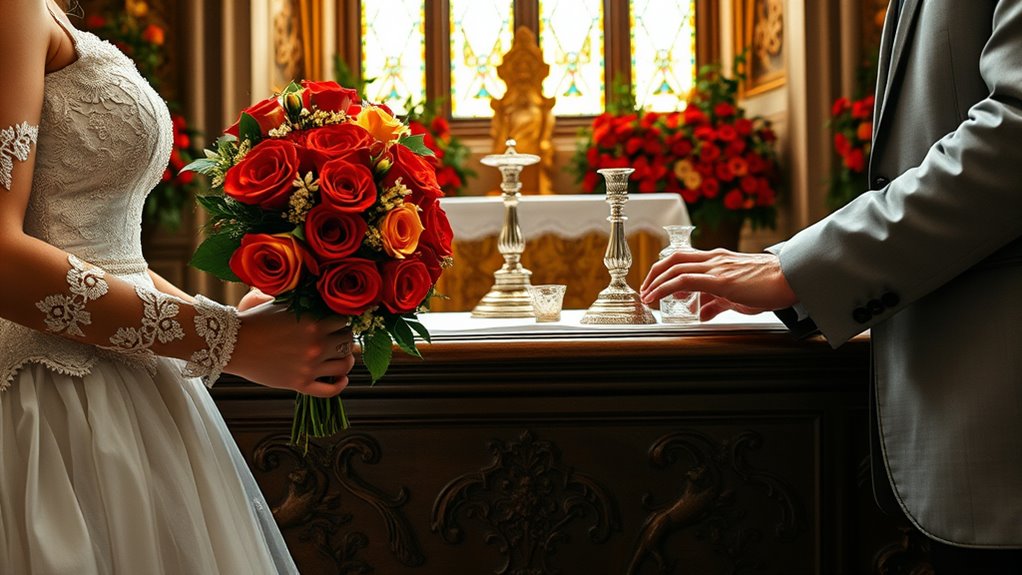
Italian wedding traditions are rich in history and symbolism, reflecting the country’s deep-rooted cultural values. When you step into an Italian wedding, you’ll notice how every detail, from the flower arrangements to the wedding attire, carries significance. Flower arrangements, in particular, are more than just beautiful decorations; they symbolize love, fertility, and new beginnings. You might see vibrant blooms like orange blossoms, which traditionally represent purity and innocence, or lush roses that embody love and passion. These flowers aren’t randomly chosen—they’re carefully selected to convey specific wishes for the couple’s future. As you observe the ceremony, notice how the floral designs are often woven into the decor, adorning the altar, the bridal bouquet, or even the wedding car, creating a seamless harmony of symbolism throughout the celebration.
Additionally, the choice of flower colors can also reflect specific hopes for the couple’s life ahead. Your wedding attire also plays an essential role in these traditions. The bride’s gown isn’t merely about fashion; it’s a reflection of heritage and good luck. Many brides opt for a classic white dress, symbolizing purity, but you might also see variations that include intricate embroidery or lace, each with its own meaning rooted in Italian culture. The groom’s attire, often a sharp suit or traditional tuxedo, signifies respect and dignity. Accessories like a veil, often worn by the bride, are believed to ward off evil spirits and bring blessings. Family heirlooms or antique jewelry might be incorporated into the wedding attire, symbolizing continuity and the importance of family heritage.
Throughout the ceremony, these elements—flowers and attire—combine to reinforce themes of unity and prosperity. The careful selection of flower arrangements isn’t just for aesthetic appeal; it’s a way to invoke good luck and blessings for the couple. Similarly, the attire worn by the bride and groom is meant to honor tradition while also celebrating personal identity. As you witness the exchange of vows and the accompanying rituals, you’ll see how these traditions serve as a bridge between past and present, anchoring the couple’s new life together in cultural symbolism.
Furthermore, understanding the significance of production quantity variance and other financial concepts can help highlight the importance of careful planning and tradition in wedding preparations, ensuring every element is meaningful and harmonious. In essence, Italian wedding traditions emphasize the significance of every detail, transforming a celebration into a meaningful rite of passage. The flower arrangements and wedding attire are not just decorative choices but are imbued with centuries of symbolism, guiding the couple into their new journey with hope, love, and cultural reverence. When you’re part of such a ceremony, you’re not just observing a wedding—you’re experiencing a rich tapestry of history woven into every moment.
Frequently Asked Questions
What Is the Significance of the Wedding Cake in Italian Ceremonies?
The wedding cake in Italian ceremonies symbolizes prosperity, fertility, and good luck for the couple. You’ll often see a cake cutting as a key moment, representing the couple’s shared future and unity. When you cut the cake together, it’s a symbolic act of partnership and commitment, wishing prosperity and happiness. Sharing the cake with guests also signifies community and the blessing of everyone present for your new life together.
How Do Italian Wedding Rituals Vary Across Different Regions?
Imagine you’re stepping into a time machine and exploring Italy’s diverse regions. You’ll find that regional customs and local traditions shape wedding rituals, creating vibrant, unique celebrations. In Sicily, elaborate feasts and folk dances thrive, while in Tuscany, wine and outdoor ceremonies take center stage. Across Italy, these regional differences celebrate local heritage, making each wedding a distinct reflection of cultural pride and history.
Are There Specific Colors Traditionally Used in Italian Wedding Attire?
You’ll notice that traditional Italian wedding attire often features white or ivory, symbolizing purity and new beginnings. While these colors are common nationwide, regional attire variations can introduce accents like red or gold, reflecting local customs and traditional color symbolism. These variations highlight regional influences, making each wedding unique. Embracing these colors, you honor both the classic symbolism and regional traditions that enrich Italian wedding celebrations.
What Are Common Superstitions Associated With Italian Weddings?
You might find Italian wedding superstitions charming and fun. For instance, carrying lucky charms like coins or herbs is believed to bring good fortune, while certain wedding omens, such as not seeing the bride before the ceremony, are meant to ward off bad luck. Guests often toss rice or confetti, symbolizing fertility and prosperity. Embracing these traditions can add a joyful, meaningful touch to your special day.
How Has Modern Influence Changed Traditional Italian Wedding Customs?
Modern influences have substantially shaped Italian wedding customs through cultural adaptations and contemporary trends. You might notice more personalized ceremonies, blending traditional rituals with modern elements like themed decor or unique vows. Couples often incorporate global trends, making the celebration more reflective of their personalities while respecting heritage. These changes allow for a richer, more inclusive experience, blending Italy’s rich wedding traditions with today’s diverse and evolving cultural landscape.
Conclusion
As you immerse yourself in Italian wedding traditions, you begin to see how each symbol and ritual weaves a story of love, hope, and unity. These customs aren’t just old habits—they’re vibrant expressions of culture that bring couples closer and create lasting memories. Can’t you picture yourself walking under a chuppah of flowers or sharing a sweet piece of cake, feeling the deep-rooted history and joy surrounding you? It’s a beautiful journey worth experiencing.