
Traditional Italian mask-making blends skilled craftsmanship with deep cultural symbolism. You’ll discover that regional techniques use materials like papier-mâché, clay, and wood, each reflecting local resources and traditions. Masks embody characters, stories, and societal roles, often representing regional identities and historical themes. The artistry involves intricate designs, vibrant colors, and symbolic decorations that preserve Italy’s cultural heritage. Exploring further reveals how these masks continue to celebrate history, community, and artistic pride across Italy’s diverse regions.
Key Takeaways
- Italian mask-making features regional craftsmanship, utilizing materials like papier-mâché, clay, and wood, with techniques passed down through generations.
- Venetian masks, renowned for elaborate designs with gold leaf and feathers, symbolize mystery and social freedom.
- Sicilian masks such as Pulcinella and Pantalone are crafted for festivals, representing local characters and storytelling traditions.
- Masks embody cultural symbolism, depicting archetypes and societal roles that reflect Italy’s rich historical and regional narratives.
- Preserving traditional techniques sustains Italy’s cultural heritage, celebrating craftsmanship and the masks’ significance in festivals and performances.
Have you ever wondered how Italy’s vibrant traditions come to life through intricate masks? These masks aren’t just decorative items; they’re powerful symbols that reflect centuries of history and cultural significance. When you explore the world of Italian mask-making, you’ll find that each mask tells a story rooted in local customs, societal roles, and historical events. The history and cultural significance of these masks stretch back to the Renaissance and even earlier, where they served various purposes—from theatrical performances and festivals to social commentary and disguises. Over time, masks became a way for communities to express their unique identities, often embodying specific characters or archetypes.
Italy’s masks tell stories of history, culture, and community identity across regions.
What makes Italian mask-making even more fascinating is the regional variation across the country. In Venice, for example, masks like the famous Bauta, Colombina, and Moretta originated in the Renaissance period and became essential during Carnival. These Venetian masks are renowned for their elaborate designs and craftsmanship, symbolizing a sense of mystery and freedom from social constraints. Meanwhile, in the region of Sicily, masks such as the Pulcinella and Pantalone are deeply embedded in traditional puppet theater and festivals, reflecting local humor and societal roles. In the south, particularly in Naples, masks are integral to the Carnevale di Putignano, where they’re crafted to represent both comedic and satirical characters, highlighting regional storytelling traditions.
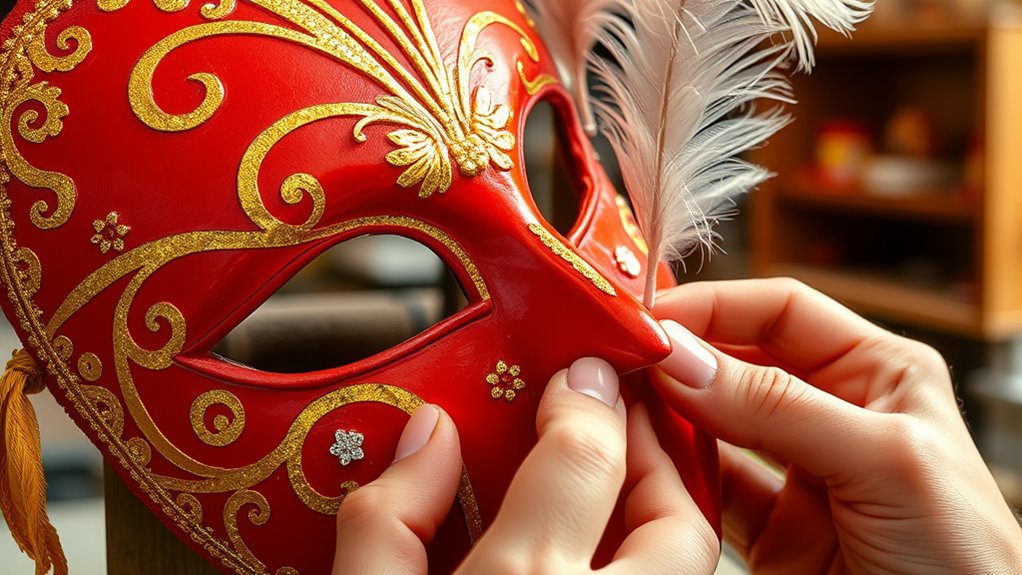
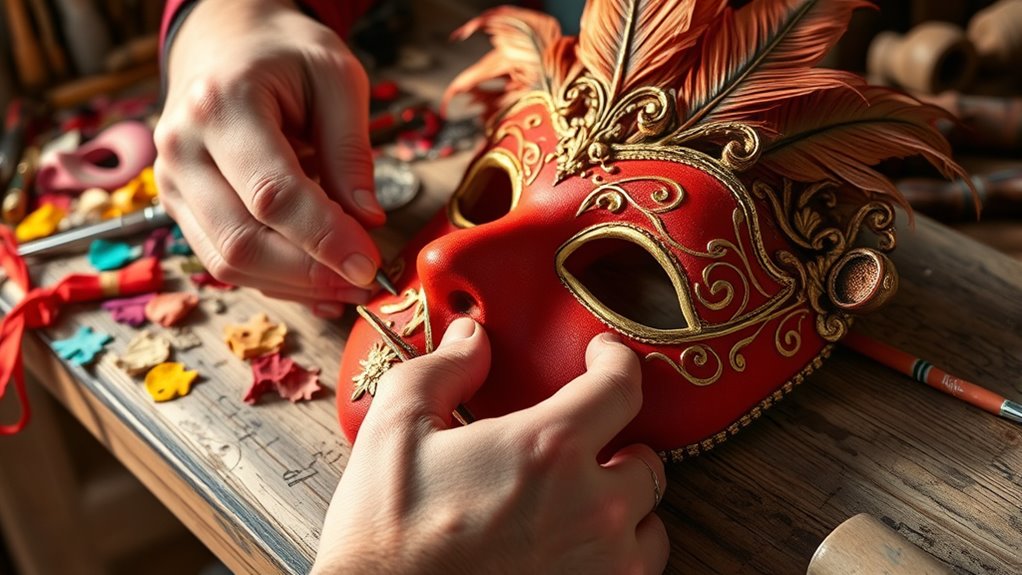
You’ll also notice that each regional variation isn’t just about aesthetics; it’s about the cultural stories behind them. The materials used, the styles, and the techniques differ from place to place, illustrating the diverse craftsmanship across Italy. For example, Venetian masks are often made from high-quality papier-mâché, decorated with feathers, gold leaf, and intricate paintwork, showcasing the city’s long-standing artistic heritage. In contrast, masks from other regions might be crafted from clay or wood, emphasizing local resources and techniques passed down through generations.
Understanding these regional differences helps you appreciate the depth of Italian mask-making traditions. It’s not merely an art form but a reflection of Italy’s layered history and the rich cultural tapestry that varies from city to city. When you see a mask, you’re witnessing centuries of storytelling, community identity, and craftsmanship coming together. These masks continue to be symbols of celebration, disguise, and cultural pride—reminding you that beneath the vibrant colors and intricate details lies a profound history that binds Italy’s diverse regions into a unified tradition.
Italian traditional mask-making kit
As an affiliate, we earn on qualifying purchases.
As an affiliate, we earn on qualifying purchases.
Frequently Asked Questions
What Are the Origins of Italian Mask-Making Traditions?
You might be surprised to learn that Italian mask-making traditions originate from a mix of historical influences, including ancient Roman and Greek theater. These masks hold deep cultural significance, used during festivals like Carnival to embody different characters and social roles. By creating vibrant, expressive masks, you connect with centuries of Italian artistry and history, celebrating a rich cultural heritage that has evolved through centuries of societal and artistic influences.
How Do Masks Vary Between Different Italian Regions?
You notice that masks vary between Italian regions through their regional styles and cultural influences. In Venice, you see elaborate, ornate masks reflecting aristocratic traditions. In Naples, you encounter colorful, lively commedia dell’arte masks emphasizing humor and storytelling. Across Sicily, you find bold, expressive masks influenced by local folklore. These regional differences highlight how local customs, history, and cultural influences shape each area’s unique mask-making style, creating a diverse tapestry of Italian mask artistry.
What Materials Are Traditionally Used in Italian Mask-Making?
You’ll find that Italian mask-making traditionally uses materials like papier-mâché, which offers great material durability and is easy to shape for mask decoration. Leather and ceramics are also common, adding resilience and unique textures. These materials allow artisans to create vibrant, durable masks perfect for festivities. Their versatility helps craft masks that not only look stunning but also withstand the rigors of celebrations and performances, enhancing their symbolic significance.
Are There Specific Symbols Associated With Certain Masks?
Yes, certain masks feature specific symbolic motifs that reflect regional significance. For example, the Commedia dell’arte masks like Harlequin and Pantalone showcase motifs representing humor, folly, or greed. These symbols help you understand their cultural roots and the stories they tell. When you see these masks, you can appreciate the regional traditions and the deeper meanings behind the designs, connecting you more deeply to Italian history and festivities.
How Has Modern Technology Influenced Traditional Mask Craftsmanship?
You’ll find that modern technology has revolutionized mask craftsmanship, with over 60% of artisans now using digital fabrication and virtual design tools. These innovations allow you to create intricate details faster and more precisely, blending tradition with innovation. You can experiment with new shapes and materials digitally before bringing them to life physically, making the process more efficient and creative. Technology truly enhances your ability to craft masks with both authenticity and modern flair.

PARAOR 16PCS DIY White Masquerade Mask Paintable Paper Mache Mask White Half Face Masks for Mardi Gras Cosplay Masquerade Dance Party Halloween
Sturdy Material: this paper mache mask is eco-friendly hard paper and easy to paint and stand up to…
As an affiliate, we earn on qualifying purchases.
As an affiliate, we earn on qualifying purchases.
Conclusion
So, next time you see a Venetian mask, remember it’s not just a pretty face hiding behind paint and feathers. It’s centuries of craftsmanship, symbolism, and a dash of theatrical mischief—all crafted by artisans who probably never knew they’d turn into icons of disguise. So, embrace the mystery, appreciate the skill, and maybe even try making your own mask—just don’t expect to fool anyone with your “artistic” masterpiece. After all, who needs truth when you’ve got tradition?

Puppet Master Blade Mask and Hat
As an affiliate, we earn on qualifying purchases.
As an affiliate, we earn on qualifying purchases.

Venetian Masquerade Coloring Book: Tradition Carnival of Venice Coloring Pages Mysterious Masks Illustrations for Teens, and Adults Relaxation and Stress Relieving
As an affiliate, we earn on qualifying purchases.
As an affiliate, we earn on qualifying purchases.