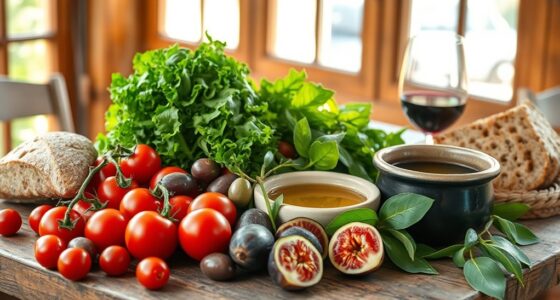
In Italian festivals, food symbolizes respect for ancestors, regional pride, and spiritual beliefs. You’ll see traditional dishes prepared in specific ways to honor land and history, often tied to seasonal or religious celebrations. Sharing these foods helps strengthen community bonds and preserve customs passed down through generations. Each dish and ritual carries deeper meaning, connecting people to their culture and past. If you explore further, you’ll discover the rich stories and traditions behind these culinary symbols.

Get home appliances delivered free with Prime
- Fast, free delivery on millions of items
- Prime Video, Amazon Music and more included
- Member-only deals all year
Key Takeaways
- Food in Italian festivals symbolizes respect for ancestors and invokes good fortune during celebrations.
- Regional dishes and ingredients serve as symbols of local identity and cultural pride.
- Foods are integrated into rituals and decorations, aligning with seasonal and religious calendars.
- Sharing traditional, symbolically meaningful foods fosters community bonds and collective memory.
- Culinary practices preserve cultural heritage and act as spiritual connectors during festive occasions.

Italian festivals are rich with food symbolism that reflects centuries of cultural tradition and local beliefs. When you participate in these celebrations, you quickly realize that every dish, ingredient, and culinary ritual carries deep meaning rooted in regional identity. Traditional culinary rituals often serve as a way to honor ancestors or invoke good fortune, making food more than just sustenance—it’s a powerful emblem of community and continuity. For example, during harvest festivals, you might see specific foods prepared in a prescribed manner, signifying respect for the land and gratitude for the bounty. These rituals often involve sharing meals that have been passed down through generations, reinforcing a sense of belonging and cultural heritage.
Regional dietary symbols are central to understanding the significance of food in Italian festivals. You’ll notice how certain ingredients or dishes become emblematic of specific areas, embodying local history and environment. In Venice, for instance, the humble polenta symbolizes the region’s agricultural roots, while in Sicily, citrus fruits like lemons and oranges represent fertility and prosperity. These dietary symbols aren’t just about taste—they’re visual and culinary markers of regional identity. When you taste a traditional dish during a festival, you’re experiencing a taste of the area’s history and values, as well as an expression of local pride. These symbols often appear in decorations, rituals, and even in the timing of certain foods, aligning with seasonal or religious calendars.
Understanding the role of food symbolism in Italian festivals also means recognizing the way these foods foster social bonds. Sharing a dish laden with symbolic meaning creates a sense of unity and collective memory. You might participate in communal bread-breaking ceremonies or enjoy sweets tied to religious stories, reinforcing the idea that food is both a spiritual and cultural connector. The act of preparing and consuming these foods often follows specific customs designed to preserve tradition and invoke blessings, making every bite a meaningful act. Food, in this context, becomes a language of its own—telling stories, celebrating history, and reaffirming community ties. Through traditional culinary rituals and regional dietary symbols, Italian festivals continue to nourish not only the body but also the soul of their communities.
Italian traditional festival food serving dishes
As an affiliate, we earn on qualifying purchases.
As an affiliate, we earn on qualifying purchases.
Frequently Asked Questions
How Do Regional Differences Influence Food Symbolism Across Italian Festivals?
Regional differences shape the food symbolism across Italian festivals by highlighting local ingredients and culinary traditions. You’ll find that each area uses specific regional ingredients to symbolize local history, culture, and beliefs. These culinary traditions reflect regional identities and values, making each festival unique. By embracing local flavors and ingredients, you understand how regional influences deeply influence the symbolic meaning of food, creating a vibrant tapestry of Italy’s diverse cultural heritage.
Are There Specific Foods Linked to Particular Italian Festivals or Regions?
Did you know that certain foods are uniquely linked to specific Italian festivals and regions? For example, in Venice, you’ll find festive recipes like Fegato alla Veneziana during Carnevale, reflecting local culinary traditions. These regional dishes highlight how food symbolism strengthens community identity. When exploring Italian festivals, you’ll discover that regional specialties play an essential role in celebrating traditions, creating a rich tapestry of culinary heritage across Italy.
How Has Modern Cuisine Impacted Traditional Festival Food Symbolism?
You might notice that modern cuisine, like fusion dishes and changing dietary trends, has influenced traditional festival foods. These adaptations often blend classic ingredients with new flavors, sometimes shifting their symbolic meanings. While some purists may resist these changes, you’ll see that they reflect evolving tastes and global influences, enriching the festivals. Overall, modern cuisine adds freshness and diversity without entirely replacing the deep-rooted symbolism of traditional Italian foods.
Do Italian Festivals Incorporate Symbolic Foods From Historical or Ancient Origins?
You’ll find that Italian festivals often incorporate symbolic foods rooted in historical origins, reflecting their cultural heritage. These traditions have endured through centuries, even as culinary evolution introduces new flavors. By participating, you connect with ancient customs that celebrate seasonal, religious, or local significance. This blending of history and modernity enriches the festival experience, allowing you to taste Italy’s rich cultural tapestry and appreciate how historical origins shape contemporary culinary practices.
How Do Italian Festival Foods Reflect Local Cultural Identities and Beliefs?
You might think that festival foods simply celebrate tradition, but they actually embody local cultural identities and beliefs. These dishes serve as food as community, bringing people together in shared joy. They also carry ritual significance, honoring history and spiritual values. By savoring regional specialties, you experience a living connection to local customs, making each bite a meaningful expression of the community’s unique heritage and collective identity.
Conclusion
As you experience these festivals, remember that food isn’t just sustenance—it’s a vessel of tradition, unity, and hope. Each dish, with its rich symbolism, connects you to Italy’s history and community spirit. Just like the ingredients blend harmoniously on the table, these celebrations remind you that shared nourishment fosters bonds that transcend time. Embrace the symbolism behind each flavor; it’s a taste of Italy’s soul, woven into every festive moment.
Halloween Picks
halloween
As an affiliate, we earn on qualifying purchases.