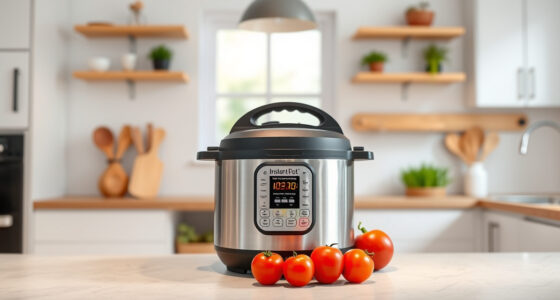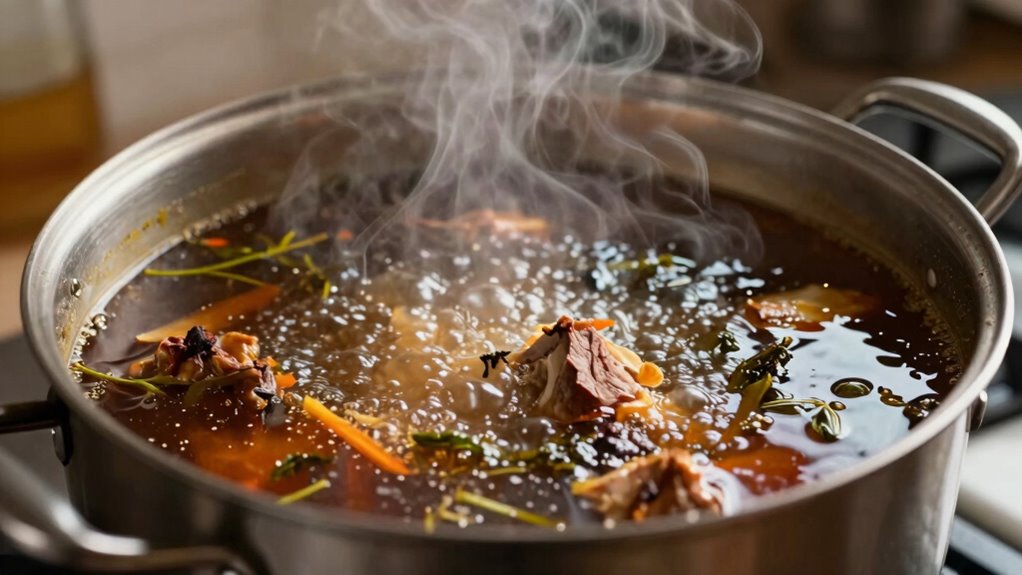

Slow simmering beats shortcuts for flavor because it allows you to fully extract and meld ingredients over time, creating richer aromas and deepened textures. By giving tough cuts of meat, root vegetables, and herbs hours to break down, you develop layered, complex flavors that shortcuts can’t match. Quick methods might boost taste temporarily, but slow simmering guarantees your dish is balanced and satisfying. Keep exploring how patience in cooking truly transforms your dishes into flavorful masterpieces.
Key Takeaways
- Slow simmering allows for gradual extraction of flavors from ingredients, creating richer, more layered dishes.
- Extended cooking breaks down tough fibers and releases essential oils, enhancing aroma and texture.
- Shortcuts like powders or concentrates lack the complexity developed through prolonged simmering.
- Proper heat control ensures even flavor development, which quick methods often fail to achieve.
- Patience in slow cooking results in deeper, more balanced taste profiles compared to rapid techniques.
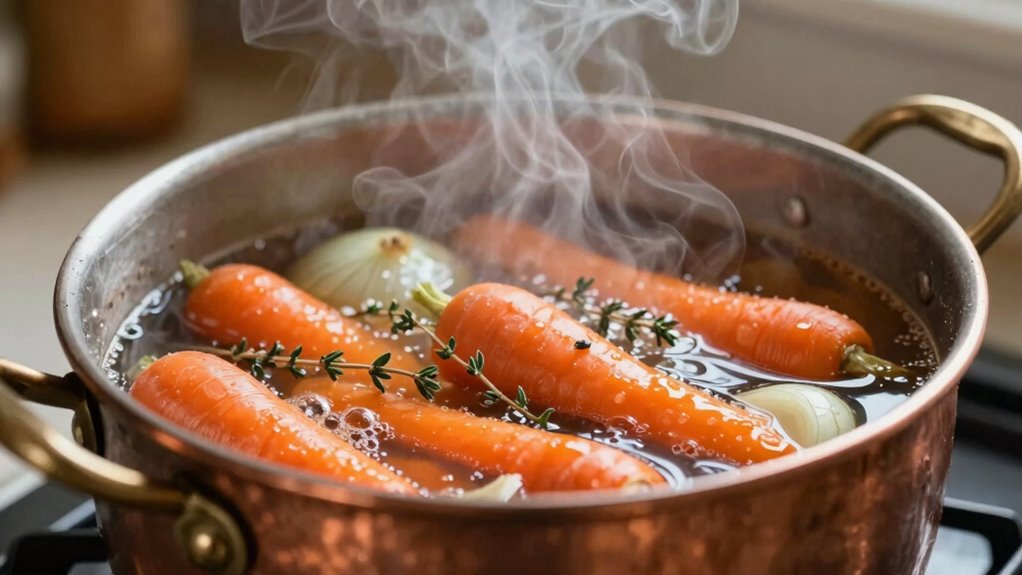
While shortcuts like using pre-made bases or rapid cooking methods might seem tempting, slow simmering consistently delivers richer, more developed flavors. You might think that boiling a sauce quickly or using instant flavor packets saves time, but these quick techniques often sacrifice depth and complexity. When you slow cook, you give ingredients time to meld, releasing essential oils, breaking down tough fibers, and enhancing the overall taste profile. That patience results in a sauce or broth bursting with layered flavors that instant flavor additives just can’t replicate.
Fast methods are appealing because they seem to offer convenience, but they often produce a flatter, less nuanced dish. When you rely on quick techniques, you might get a decent taste initially, but the complexity fades fast. Slow simmering, on the other hand, allows flavors to deepen and develop over time. You’ll notice a richer aroma, a smoother texture, and a more balanced taste because the ingredients have had the chance to interact fully. It’s this flavor extraction that makes slow cooking worth the extra patience.
Another benefit of slow simmering is its ability to extract maximum flavor from ingredients. Tough cuts of meat, root vegetables, and herbs benefit from extended cooking times, releasing their juices and essential flavors gradually. This process creates a more savory and satisfying dish. Instant flavor tricks, like adding powders or concentrates at the end, may give a quick boost of taste, but they don’t replace the layers created through slow extraction. If you’re aiming for a dish with depth, giving your ingredients time to break down is the key. Additionally, proper heat management like maintaining a gentle simmer can significantly influence the development of flavors and prevent overcooking or burning. Using adequate heat distribution with a heavy-bottomed pot can help ensure consistent heat and better flavor development during slow cooking.
While it might seem counterintuitive, slow simmering doesn’t have to be complicated or time-consuming if you plan ahead. You can prepare ingredients in advance and let the dish cook itself for hours, freeing you up for other tasks. This method also reduces the need for additional seasonings or artificial flavor boosters, as the natural flavors intensify during the long, gentle heat. In fact, temperature control is crucial for ensuring an even simmer that enhances flavor without risking overcooking. Relying on instant flavor tricks, like adding powders or concentrates at the end, may give a quick boost of taste, but they don’t replace the layers created through slow extraction. If you’re aiming for a dish with depth, giving your ingredients time to break down is the key. Additionally, proper cookware like a heavy-bottomed pot can help maintain consistent heat during slow simmering, ensuring optimal flavor development. In the end, the true advantage of slow simmering lies in its ability to transform simple ingredients into a harmonious, flavorful dish. Quick techniques might save time initially, but they rarely produce the rich, layered flavors that develop during slow cooking. If you’re after a meal with depth, complexity, and a satisfying aroma, embracing the patience of slow simmering makes all the difference.
As an affiliate, we earn on qualifying purchases.
Frequently Asked Questions
Can Slow Simmering Be Used for All Types of Dishes?
Yes, slow simmering can be used for many dishes, but it’s not perfect for all. Quick techniques work better for dishes needing immediate results, like stir-fries or seafood. Slow simmering preserves flavor and tenderizes ingredients, making it ideal for soups, stews, and braises. While it’s versatile, understanding the dish’s needs helps you decide when to use slow simmering for the best flavor.
How Does Slow Simmering Affect Nutritional Value?
Slow simmering helps retain more nutrients compared to high-heat methods, as it’s gentle and minimizes nutrient loss. It also enhances flavor, allowing ingredients to meld and develop richer tastes. You’ll notice better nutrient retention in vegetables and proteins, and the prolonged process boosts flavor enhancement without compromising your dish’s nutritional value. By simmering slowly, you preserve essential vitamins and minerals while creating a more delicious, nutrient-rich meal.
What Are the Best Ingredients for Slow Simmering?
For slow simmering, choose hearty ingredients like fresh herbs—thyme, rosemary, bay leaves—and flavorful additions like garlic, onions, and root vegetables. Use high-quality broth or water as your base, enhancing it with a splash of soy sauce or a squeeze of lemon for depth. Incorporate tender meats or beans for richness. These ingredients, paired thoughtfully, develop complex flavors and aroma, making your dish irresistibly savory and satisfying.
Is There a Risk of Overcooking With Slow Simmering?
Yes, there’s a risk of overcooking with slow simmering, which can affect flavor development and texture enhancement. If you leave ingredients simmering too long, you might lose some delicate flavors or turn vegetables mushy. To prevent this, keep an eye on the simmering process and adjust the heat as needed. Proper timing ensures the flavors deepen without compromising the dish’s texture, giving you a perfect balance.
How Can I Tell When a Dish Is Perfectly Simmered?
You’ll know your dish is perfectly simmered when the texture develops a tender, melt-in-your-mouth quality, and the flavors concentrate into a rich, harmonious blend. Watch for gentle bubbling and slight reduction, signaling the right moment. The aroma intensifies, and the ingredients feel just right—never overdone. Trust your senses: taste, smell, and texture tell you when it’s reached that ideal point of flavor development.
Conclusion
Remember, like the slow unfolding of a story in a classic novel, slow simmering reveals deeper flavors that shortcuts can’t match. When you take the time to let ingredients mingle and develop fully, you’re crafting more than just a meal—you’re creating an experience. So next time you’re tempted to rush, think of the timeless wisdom from the slow and steady tortoise. Embrace patience, and your dish will reward you with richness only time can reveal.