
TL;DR

Get home appliances delivered free with Prime
- Fast, free delivery on millions of items
- Prime Video, Amazon Music and more included
- Member-only deals all year
A House Beautiful report gathers organizing and design experts’ advice on 13 categories of belongings to review after five years in a home. The recommendations include unused equipment, expired products and leftover renovation materials; they are general decluttering suggestions, not a rule that every household must discard these items.
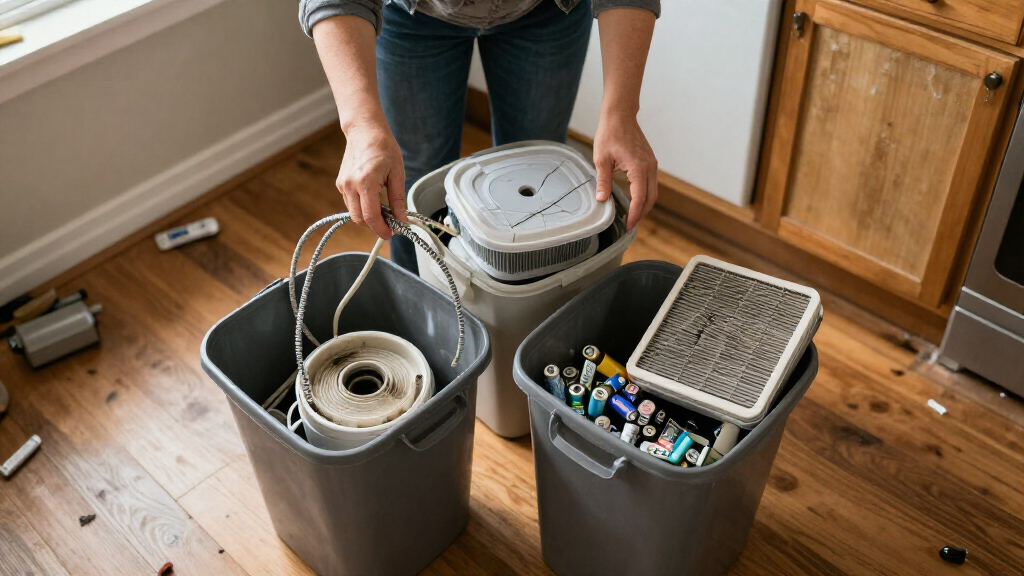
The list includes accumulated tote bags, water bottles and branded merchandise; manuals and cords for devices no longer owned; worn or mismatched linens; long-unused fitness equipment; and supplies for projects that have remained unfinished. It also covers decorative objects residents no longer notice, decor that did not suit a previous home, and surplus paint, tile or other building materials.
The remaining categories are rarely used kitchen gadgets, wellness devices no longer part of a routine, furniture that no longer works for the household, expired or unwanted bathroom and cleaning products, and unopened boxes. The supplied article excerpt names unopened boxes as a category but does not include further guidance about them.
The experts recommend keeping items that still serve a purpose and finding appropriate ways to pass on usable extras. For worn linens, Kerrie Kelly suggests recycling them where possible. Ann Lightfoot advises taking paint and other leftover building materials to a local hazardous-waste drop-off; the source says to retain a small labeled paint sample, and possibly one tile, for future repairs.
A Five-Year Home Reset
The checklist addresses a common household problem: belongings can accumulate while a home’s available storage stays the same. Reviewing what is actually used can free cabinet, closet and floor space, while reducing the time spent sorting around items residents no longer need. The advice may also help people match their rooms to current routines rather than older plans or interests.
The article frames decluttering as a series of choices, not a demand to empty a home. Usable goods can be donated or passed along, while materials that need special handling should follow local disposal rules. That distinction matters: “toss” does not always mean put in household trash.
Products Worth Considering

Bose SoundLink Max Bluetooth Speaker

Levoit Vital Pet Pro Smart Air Purifier for Pets, White

Philips Hue White and Color Ambiance Smart Light Starter Kit, 2 A19 Bulbs with Hub
As an affiliate, we earn on qualifying purchases.
Why Experts Suggest a Review
The report presents the five-year mark as a useful moment to take stock, not as a scientific threshold or a deadline. Ann Lightfoot, cofounder of DDH Home Organizing & Move Management, says the period can reveal that possessions have grown while the home has not. Laura Kinsella, founder of Urban OrgaNYze, says careers, families, routines and interests can change while stored belongings remain the same.
Kerrie Kelly, CEO and creative director of Kerrie Kelly Studio and NKBA 2026 National Board Chair, recommends working one drawer, cabinet or closet at a time. Her approach is to remove items, clean the space and return only what merits a place there. The advice favors gradual editing over attempting to declutter an entire home in one weekend.
““Taking stock after five years gives us a chance to see what’s actually taking up space, what we’re still using, and what we’ve simply gotten used to storing.””
— Laura Kinsella, founder of Urban OrgaNYze
What the Checklist Cannot Decide
The recommendations are expert opinions reported by House Beautiful, not a formal standard for how often households should declutter. Whether an item is useful depends on the person, the home and any plans for repair or future use. The source excerpt also provides no detailed method for sorting the unopened boxes it lists.
Disposal requirements vary by location and product. The article specifically directs residents to local hazardous-waste drop-off for leftover paint and building materials; it does not provide local rules for every category, such as electronics, cleaning products or textiles. Readers should check municipal guidance before disposing of materials that may require special handling.
Start With One Small Area
The report’s practical next step is to choose one category or compact space, remove its contents, clean the area and decide what to keep, donate, recycle or dispose of appropriately. Residents can repeat the process over time rather than treating the five-year mark as a reason for a full-house clear-out.
For paint, tile and other renovation leftovers, check local waste guidance before disposal and retain only the small repair supplies that are genuinely useful. The source does not announce a follow-up program or a required deadline; the decision about what stays is left to each household.
Key Questions
Does the report say everyone should throw away these 13 categories?
No. It offers categories to review, not a requirement to discard every item. Keep belongings that are useful, meaningful or needed for repairs.
What should I do with old paint and leftover building materials?
House Beautiful’s source report advises keeping a small labeled paint sample and possibly one tile, then taking excess or dried-up materials to a local hazardous-waste drop-off. Check your municipality’s rules.
How should I begin decluttering after several years?
Kerrie Kelly recommends starting with one drawer, cabinet or closet, removing the contents, cleaning the space and returning only what deserves to be there.
What kinds of items are included in the 13 categories?
Examples include unused branded bags and bottles, cords for devices no longer owned, worn linens, idle exercise equipment, stalled project supplies, unwanted decor, seldom-used kitchen or wellness gadgets, ill-fitting furniture, expired products and unopened boxes.
Source: housebeautiful.com