
To cope with Seasonal Affective Disorder, try light therapy by spending time near a bright light each morning to boost serotonin and regulate your mood. Incorporate foods rich in vitamin D, omega-3s, and folate to support your mental health. Maintain a regular routine, exercise outdoors during daylight, and stay socially connected. If your symptoms persist, professional treatments like therapy or medication can help. Discover more strategies to brighten your days ahead.
Key Takeaways
- Light therapy using a bright box can regulate circadian rhythms and improve mood during darker months.
- Incorporating omega-3-rich foods and vitamin D supplements supports mood stabilization in seasonal periods.
- Regular physical activity and outdoor walks boost endorphin levels and help combat SAD symptoms.
- Maintaining consistent sleep routines and social interactions can reduce feelings of isolation and improve mental health.
- Seeking professional treatments like CBT or medication can enhance coping strategies for persistent SAD symptoms.
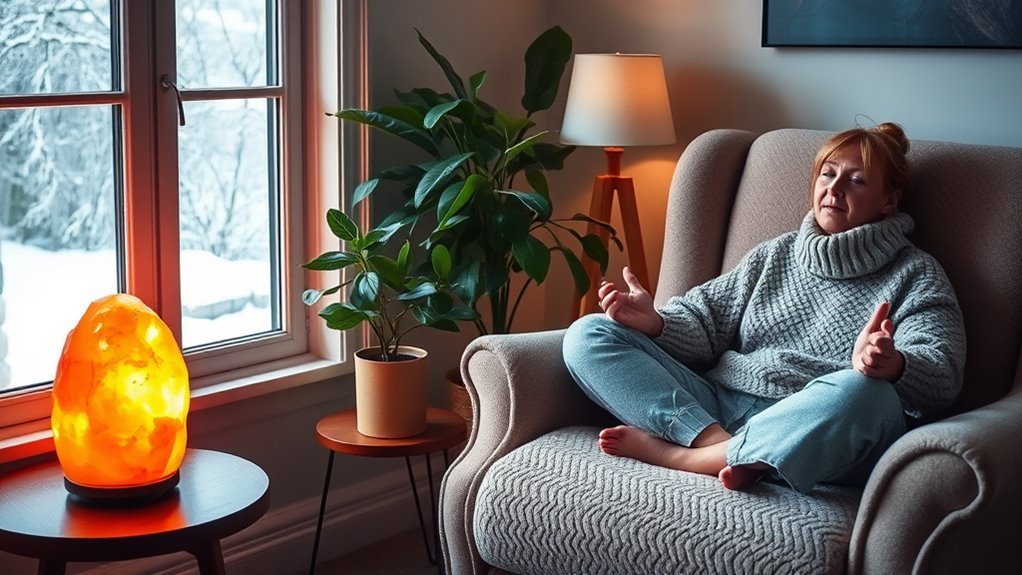
Have you ever felt unusually sad or sluggish during certain times of the year? If so, you’re likely experiencing symptoms of Seasonal Affective Disorder (SAD), a type of depression that follows a seasonal pattern. Many people notice these changes as the days grow shorter and darker, especially in fall and winter. The good news is that you can take active steps to manage these feelings and restore your mood and energy levels. One effective approach is light therapy, which involves exposure to a bright light that mimics natural sunlight. Sitting in front of a light therapy box each morning can help regulate your circadian rhythms and boost your serotonin levels, which often dip during darker months. Consistency matters; making it part of your daily routine can make a noticeable difference. Alongside light therapy, paying attention to your diet can profoundly impact your mental health. Dietary adjustments that include foods rich in omega-3 fatty acids, folate, and vitamin D can help support your mood. For example, fatty fish like salmon or mackerel, leafy greens, and fortified cereals can provide essential nutrients that combat depressive symptoms. Incorporating these into your daily meals not only improves your overall nutrition but also helps counteract the seasonal dips in mood. You might also consider taking a vitamin D supplement, especially if sunlight exposure is limited. Vitamin D plays a critical role in mood regulation, and deficiency is common during months with less sunlight. Besides dietary changes, maintaining a balanced routine that includes regular physical activity can further alleviate symptoms. Exercise releases endorphins, natural mood lifters, and helps regulate sleep patterns, which are often disrupted in SAD. Even simple activities like walking outside during daylight hours can be beneficial. Using alarm clocks to establish a consistent sleep schedule can also positively influence your mental health during darker months. It’s important to create a supportive environment by staying connected with friends and loved ones, as social interaction can buffer against feelings of isolation. If you find that these strategies aren’t enough, don’t hesitate to seek professional help. Therapies like cognitive-behavioral therapy (CBT) are effective in addressing SAD, and a healthcare provider can guide you through medication options if necessary. Remember, managing SAD is about combining multiple strategies—light therapy, dietary adjustments, exercise, and social support—tailored to your needs. By taking proactive steps, you can reduce the impact of seasonal changes on your mental health and enjoy more balanced, brighter days.

SUXIO Light Therapy Lamp – 10000 Lux Therapy Light, 3 Timing & Mode Happy Lamp, Touch Control Daylight Lamp with Memory Function, Portable Light Therapy Box for Home/Office Use As Lift Mood
- 3 Brightness Modes: 4000-7000-10000 Lux levels
- Adjustable Timer: 30/60/90 minutes options
- Memory Function: Remembers last used settings
As an affiliate, we earn on qualifying purchases.
As an affiliate, we earn on qualifying purchases.
Frequently Asked Questions
Can SAD Occur During the Summer Months?
Yes, SAD can occur during the summer months, often called summer blues. You might notice seasonal mood shifts, feeling more anxious, irritable, or having trouble sleeping despite the warm weather. These symptoms can be confusing since summer is generally associated with happiness. If you experience these feelings, it’s important to recognize that summer SAD is real and seek coping strategies or professional help to manage your mood effectively.
How Does Diet Influence SAD Symptoms?
Your diet can dramatically affect SAD symptoms, acting like a powerful force in mood regulation. Poor nutritional impact, such as lacking omega-3s, vitamin D, or B vitamins, may worsen feelings of sadness. Conversely, eating nutrient-rich foods helps stabilize your mood, boost energy, and improve overall well-being. By choosing balanced meals, you support your brain’s chemistry, making it easier to manage SAD symptoms and feel more resilient during tough times.
Are There Alternative Therapies Beyond Light Therapy?
Yes, beyond light therapy, you can explore herbal remedies like St. John’s Wort or valerian root, which may help boost mood. Acupuncture treatment is another alternative that some find effective for reducing SAD symptoms by stimulating specific points to balance your energy. Always consult a healthcare professional before trying these options to confirm they’re appropriate for your needs and won’t interfere with any medications you’re taking.
What Are the Long-Term Effects of Untreated SAD?
If you leave SAD untreated, you risk worsening depression, worsening Vitamin D deficiency, and disrupting your circadian rhythm. You might experience persistent low energy, difficulty sleeping, and social withdrawal. Over time, these effects can lead to lasting mental health issues, strained relationships, and decreased quality of life. Addressing SAD early helps restore your mood, regulate your circadian rhythm, and boost your Vitamin D levels, improving your overall well-being.
Can Exercise Help Prevent Seasonal Mood Changes?
Yes, exercise benefits can help prevent seasonal mood changes. When you stay active, you promote mood regulation by releasing endorphins and boosting serotonin levels, which combat feelings of sadness and fatigue. Regular physical activity, especially outdoors, exposes you to natural light, further supporting your mental health during darker months. Incorporating exercise into your routine can be a proactive way to maintain emotional balance and reduce seasonal mood swings.
Conclusion
Remember, even when the days feel a little dimmer, there’s always a gentle light within you waiting to shine through. By embracing simple coping strategies and seeking support, you can find moments of warmth and hope amid the quiet seasons. Though the journey may have its shadows, each small step forward brings you closer to brighter days. Trust in your resilience—you’re capable of nurturing your inner sunshine, one gentle moment at a time.