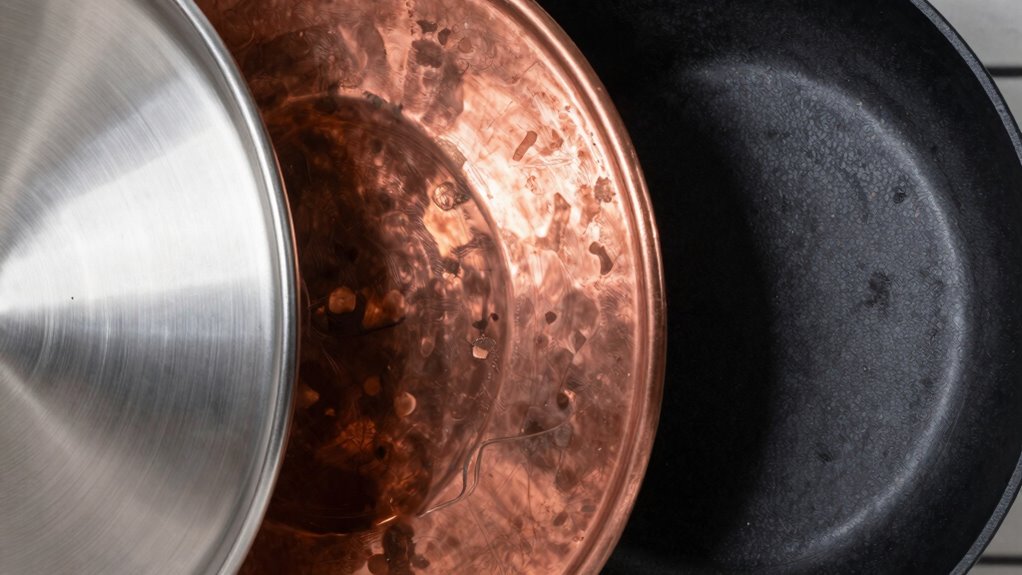
Stainless steel is durable, low-maintenance, and versatile, making it a reliable choice for many cooking styles. Copper offers exceptional heat conduction and precise control but requires regular polishing and lining to prevent reactivity. Carbon steel responds well to high heat and develops a natural non-stick patina over time, often at a lower cost. Each material has its strengths, but exploring the details will help you find the best fit for your kitchen needs.
Key Takeaways
- Copper provides rapid, precise heat control but requires regular polishing and lining to prevent reactivity issues.
- Stainless steel is durable, non-reactive, and offers a sleek look, making it versatile and low-maintenance.
- Carbon steel heats quickly, develops a natural non-stick patina, and is cost-effective for high-heat cooking.
- Copper’s exceptional thermal conductivity justifies its higher price, ideal for delicate or precise culinary tasks.
- Proper maintenance, such as seasoning or polishing, is essential to maximize each material’s performance and lifespan.
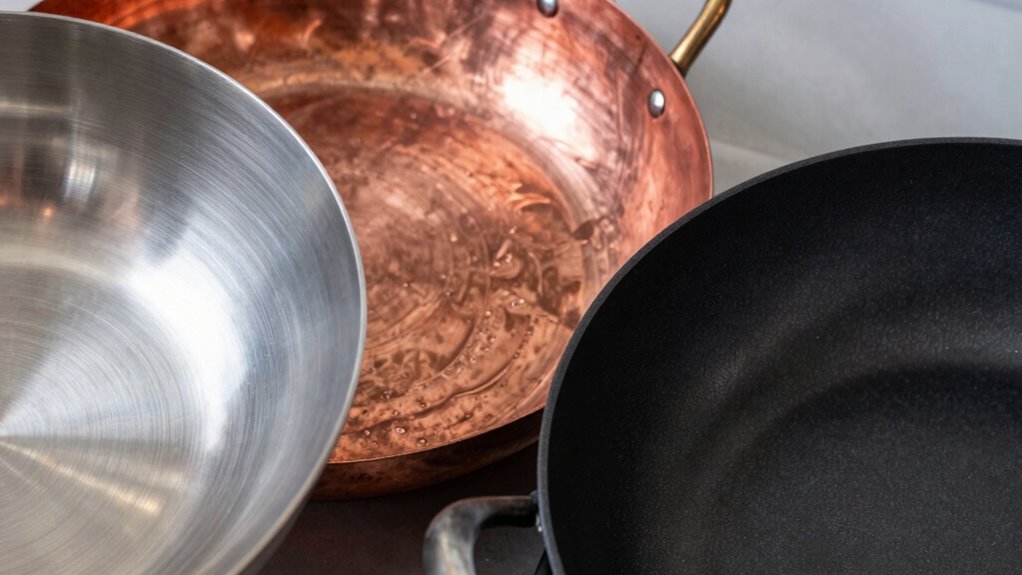
Are you trying to decide between stainless steel, copper, and carbon steel for your cookware or tools? Making this choice can seem overwhelming because each material has its unique qualities. Your decision will depend on what you prioritize most in your kitchen—whether it’s cooking compatibility or aesthetic appeal. Stainless steel is renowned for its durability and versatility. It’s compatible with most cooking styles, handling everything from searing steaks to simmering sauces. Its non-reactive surface means you won’t have to worry about flavors transferring or discoloration, making it a reliable workhorse in your kitchen. Plus, stainless steel cookware often comes with a sleek, modern look that fits well with most kitchen designs, giving you an aesthetic appeal that’s both timeless and professional.
Stainless steel offers durability, versatility, and a sleek, timeless look for all your cooking needs.
Copper, on the other hand, is a favorite among professional chefs for its exceptional cooking compatibility. Its quick and even heat conduction allows you to control temperature precisely, which is essential for delicate sauces or confections. Copper cookware heats up rapidly and cools down just as fast, giving you an incredible level of control. However, copper’s aesthetic appeal is arguably its most striking feature. Its warm, shiny finish adds a touch of elegance to any kitchen, making it as much a decorative piece as a functional tool. Keep in mind that copper can tarnish over time, requiring regular polishing to maintain its luminous appearance. Also, because it’s reactive, copper can influence the flavor of certain foods unless lined with a non-reactive metal like stainless steel or tin. The thermal conductivity of copper is what makes it stand out, allowing for precise temperature adjustments that are critical in many culinary techniques. Proper maintenance and lining options can extend the lifespan of copper cookware, ensuring it remains both beautiful and functional.
Carbon steel offers a middle ground, combining durability with excellent cooking compatibility. It heats quickly and responds well to temperature changes, similar to copper, but at a lower cost. Carbon steel pans develop a natural non-stick patina over time, which enhances their performance and adds a rustic charm to their aesthetic appeal. They’re also versatile enough to handle high heat for searing or stir-frying and can be used on various heat sources, including open flames and induction cooktops. Although they may not be as visually striking as copper, a well-seasoned carbon steel pan can look attractive and aged, adding character to your kitchen. While it may require a bit of maintenance to keep it rust-free, it’s a practical choice for those who want a balance of performance, durability, and visual interest. Regular seasoning and proper drying are key to maintaining its rust resistance and overall longevity, making it a cost-effective and reliable option.
Ultimately, your choice will hinge on what you value most—whether it’s the precise control and beauty of copper, the resilience and modern look of stainless steel, or the versatile, seasoned appeal of carbon steel.

Cuisinart Chef’s Classic 11-Piece Stainless Steel Pots and Pans Set, Cookware Set Compatible with Induction, Electric, Gas Cooktops, Aluminum Core for Even Heat, Cool Grip Handles, Dishwasher Safe
KITCHEN COOKWARE SET: This Cuisinart stainless steel cookware set includes 1.5 qt. & 2.5 qt. saucepans w/glass covers,…
As an affiliate, we earn on qualifying purchases.
As an affiliate, we earn on qualifying purchases.
Frequently Asked Questions
Which Material Is Safest for Non-Stick Cooking?
You should choose cookware with safe non-stick coatings for the best non-stick cooking experience. While stainless steel, copper, and carbon steel each offer excellent cooking performance, they typically don’t have non-stick surfaces built-in. Opt for pans with high-quality non-stick coatings that are free from harmful chemicals like PFOA or PTFE. This guarantees safe, easy food release and reduces the risk of health issues, making your cooking both safer and more efficient.
How Do Maintenance Requirements Differ Among the Three Materials?
You’ll find stainless steel easiest to maintain with simple cleaning routines; it’s highly resistant to scratching, making it durable over time. Copper requires regular polishing to prevent tarnishing, and gentle cleaning is best to avoid scratches. Carbon steel demands consistent seasoning and careful hand washing to preserve its surface. So, if low-maintenance and scratching resistance matter, stainless steel might suit you best, while copper and carbon steel need more attentive care.
Are There Health Concerns With Copper or Carbon Steel Leaching?
You should know that copper can leach into food, potentially causing copper toxicity if consumed in high amounts over time, especially with acidic foods. For carbon steel, corrosion could lead to rust particles mixing into your meals, raising health concerns. While both materials are generally safe when properly maintained, it’s crucial to avoid prolonged contact with acidic foods and keep cookware in good condition to minimize leaching risks.
Which Material Is Most Eco-Friendly to Produce and Recycle?
You might be surprised, but copper often leads in eco-friendliness. Its production has a lower environmental impact compared to stainless steel and carbon steel, thanks to efficient recycling processes. Copper’s high recycling efficiency means it can be reused repeatedly without losing quality, reducing waste and energy consumption. So, if you’re aiming for sustainability, copper stands out as the most eco-friendly choice, balancing environmental impact and recyclability effectively.
How Do Prices Vary Over Time for Each Material?
You’ll notice that prices fluctuate over time for each material due to market trends and supply-demand shifts. Copper prices tend to be more volatile, influenced by global economic conditions and industrial demand. Stainless steel prices are relatively stable but can rise with raw material costs. Carbon steel prices often follow steel market trends, showing moderate fluctuations. Staying updated on market trends helps you anticipate price changes and make informed purchasing decisions.

MICHELANGELO Sauce Pan with Lid, Ultra Nonstick 3 Qt Saucepan with Lid, 3 Quart Non Stick Pot Induction Compatible, Ceramic Small Pot, Copper
100% Non-Toxic Saucepan for Healthy Cooking – This 3 qt sauce pan uses PFOA/PFOS-free ceramic coating – zero…
As an affiliate, we earn on qualifying purchases.
As an affiliate, we earn on qualifying purchases.
Conclusion
When it comes to choosing between stainless steel, copper, and carbon steel, think of your cookware as a trusted partner on your culinary journey. Each material has its own personality—stainless steel’s durability, copper’s quick response, and carbon steel’s versatility. By matching their strengths to your cooking style, you’ll release the true potential of your kitchen. Remember, the right pan isn’t just a tool; it’s the secret ingredient that makes every meal memorable.

Merten & Storck Pre-Seasoned Carbon Steel 8” Frying Pan Skillet, Use on Induction, Stove and Grill, Durable, Even-Heating, for Searing, Grilling, Oven Use, and Campfire, Indoor/Outdoor
NEW YORK MAGAZINE’S The Strategist: Selected as the top budget-friendly carbon steel option, noted for being “a no-nonsense…
As an affiliate, we earn on qualifying purchases.
As an affiliate, we earn on qualifying purchases.
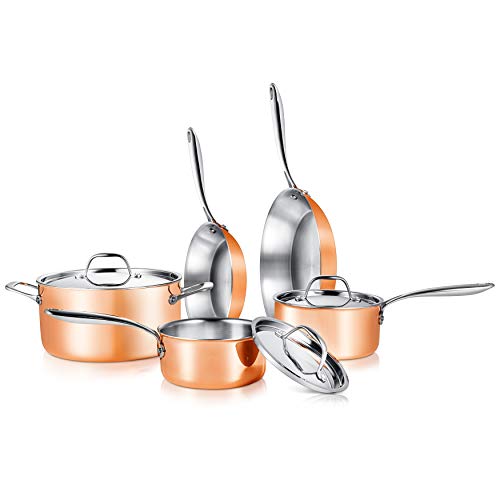
NutriChef 8 Pcs. Stainless Steel Cookware Set – Kitchenware Pots & Pans Set Stylish Kitchen Cookware w/Cast SS Handle, Tri-Ply Authentic Copper, for Saucepan, Casserole, Frying Pan, Lids – NCCW8SS
8-PIECE SET: The stainless steel pots and pans set comes complete with saucepan pot with lid (1.6 qt),…
As an affiliate, we earn on qualifying purchases.
As an affiliate, we earn on qualifying purchases.