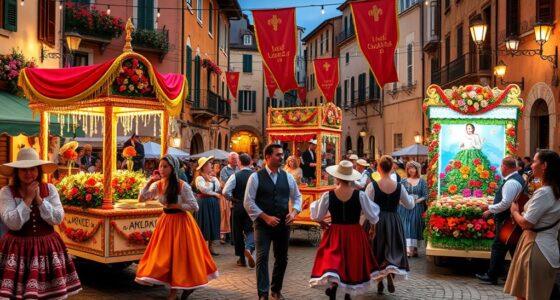
Preserving Italy’s Jewish heritage involves protecting historic synagogues, ghetto districts, and ongoing traditions that tell a story of resilience and faith. Your support helps prevent deterioration caused by neglect, modern development, and aging structures. Preservation efforts ensure these sites maintain their authenticity and cultural significance for future generations. By understanding the importance of community, education, and conservation, you’ll discover how this rich heritage continues to thrive today. Explore further to learn more about this essential cultural legacy.
Key Takeaways
- Preservation efforts safeguard the architectural integrity and historical authenticity of synagogues, ghetto districts, and cultural sites.
- Restoring these sites helps maintain Italy’s diverse cultural heritage and honors the community’s resilience and faith.
- Cultural and educational initiatives promote awareness, appreciation, and the transmission of Jewish traditions to future generations.
- Protecting Jewish heritage requires collaboration among government, local communities, and visitors to ensure sustainable conservation.
- Addressing threats like neglect and modernization is vital to prevent the deterioration and loss of Italy’s Jewish historical sites.
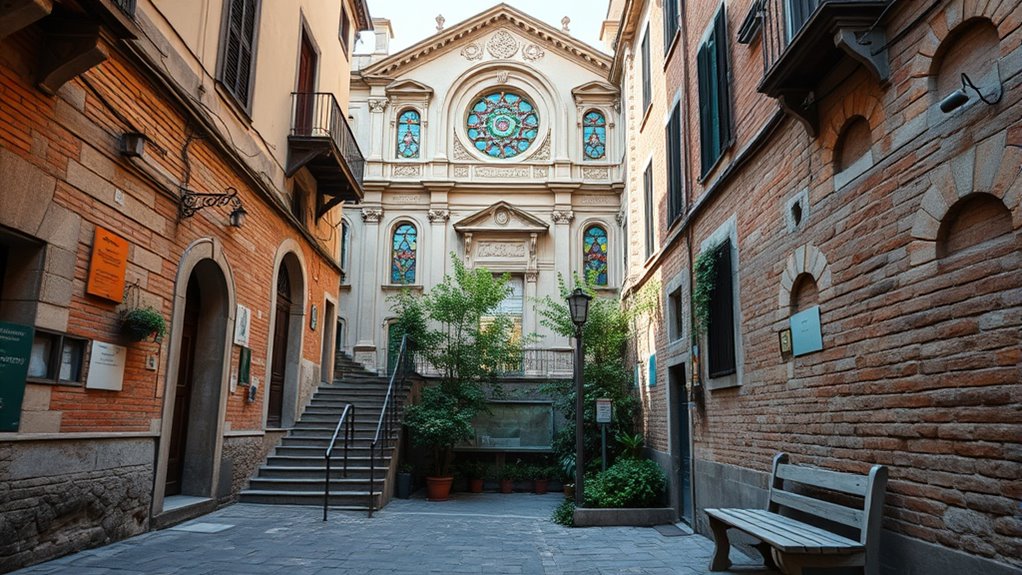
Italy’s Jewish heritage is a pivotal part of the country’s cultural landscape, yet it faces ongoing threats from time, neglect, and modernization. As you explore the country’s historic neighborhoods, synagogues, and ghetto districts, you realize how essential it is to focus on cultural preservation. These sites aren’t just relics; they are living testimonies to a resilient community’s history, faith, and identity. Safeguarding this architectural heritage ensures that future generations can connect with their roots and appreciate the rich tapestry of Italy’s diverse past.
You see that many of Italy’s Jewish sites are at risk of deterioration. Synagogues, with their intricate architecture and spiritual significance, often suffer from neglect or lack of funds for upkeep. Preservation efforts are indispensable to maintain their structural integrity and historical authenticity. Restoring these buildings isn’t simply about bricks and mortar; it’s about safeguarding a cultural legacy that embodies centuries of tradition. When you witness the meticulous work involved in conserving these structures, you understand how architectural heritage is intertwined with cultural identity. Every stone and decorative detail tells a story of perseverance and faith.
Preserving Italy’s Jewish synagogues safeguards centuries of cultural tradition and faith.
As you walk through historic ghettoes, the significance of cultural preservation becomes even clearer. These neighborhoods, once vibrant centers of Jewish life, face the challenge of modern development, which can threaten their authenticity. You realize that maintaining their unique character involves more than physical restoration—it requires ongoing efforts to keep traditions alive. Museums, cultural centers, and educational programs play essential roles in this process, providing context and fostering appreciation among visitors and locals alike.
The importance of preserving Italy’s Jewish architectural heritage goes beyond mere aesthetics. It preserves the memory of communities that thrived despite adversity. By supporting conservation projects and respecting these sites, you help ensure that the stories, customs, and sacrifices of past generations are not lost to time. This effort also enriches the broader cultural landscape, reminding everyone of Italy’s diverse heritage and the contributions of its Jewish communities. Additionally, understanding the historical significance of these sites deepens your appreciation for their resilience and cultural importance.
Ultimately, you see that the preservation of Italy’s Jewish sites is a shared responsibility. It requires collaboration among government agencies, local communities, historians, and visitors. Your role in appreciating and promoting these sites helps sustain their significance. By valuing cultural preservation and caring for these architectural treasures, you contribute to keeping Italy’s Jewish heritage alive—an enduring symbol of resilience, faith, and cultural richness that deserves to be celebrated for generations to come.
Jewish synagogue restoration tools
As an affiliate, we earn on qualifying purchases.
As an affiliate, we earn on qualifying purchases.
Frequently Asked Questions
How Do Local Communities Participate in Preserving Jewish Heritage Sites?
You actively participate in preserving Jewish heritage sites through community engagement and cultural education. By volunteering at local museums, organizing events, and spreading awareness, you help safeguard these historic sites. Attending guided tours and workshops deepens understanding and appreciation. Your involvement guarantees the preservation of traditions and history, fostering respect and continuity within your community. Together, your efforts keep Italy’s Jewish heritage vibrant and accessible for future generations.
What New Technologies Are Used in Documenting Historical Synagogues?
You can use digital mapping to create detailed, interactive models of historical synagogues, helping preserve their architecture and layout. Virtual tours allow you to explore these sites remotely, engaging a wider audience and raising awareness. By employing these technologies, you guarantee that the rich history and cultural significance of synagogues are documented and accessible for future generations, even if physical access becomes limited.
How Do Preservation Efforts Impact Local Tourism and Economy?
Your preservation efforts boost local tourism and economy by attracting visitors interested in Italy’s rich Jewish heritage. This increased foot traffic leads to economic growth, supporting local businesses like restaurants, shops, and tour operators. Additionally, these efforts enhance cultural recognition, highlighting the historical significance of synagogues and ghettoes. As a result, communities thrive, and your work helps sustain Italy’s diverse cultural legacy for future generations.
Are There Specific Challenges Faced in Restoring Ancient Ghettoes?
Imagine you’re stepping into a scene that’s centuries old, but structural deterioration threatens its integrity. Restoring ancient ghettoes faces challenges like fragile structures and balancing cultural sensitivity. You need to cautiously maintain historical authenticity while updating safety standards. This delicate process requires expert craftsmanship and respect for the community’s heritage. Overcoming these obstacles ensures that future generations can experience the rich history without compromising its authenticity or safety.
How Can Visitors Respectfully Engage With Preserved Jewish Sites?
When visiting preserved Jewish sites, you should practice respectful engagement by observing cultural sensitivity. Take time to learn about their history, avoid loud noises, and refrain from touching artifacts without permission. Respect any guidelines or signage, and listen to guided tours to deepen your understanding. By showing genuine respect, you help honor the significance of these sites and support their preservation for future generations.
Conclusion
As you walk through Italy’s ancient streets, imagine the whispers of centuries-old prayers echoing softly, safeguarding a vibrant Jewish legacy. Every synagogue and ghetto stands as a shining beacon amidst shadows of history, shining with resilience and hope. By preserving these treasured sites and traditions, you help keep the flame alive, guiding future generations through the tapestry of time. Embrace this mission—your effort is the brushstroke that keeps Italy’s Jewish heritage alive and radiant for all to see.